
Webinars
Explore Smarthub Academy’s webinars — featuring experts, live sessions, and insights to empower learners in the tech ecosystem.
 Passed
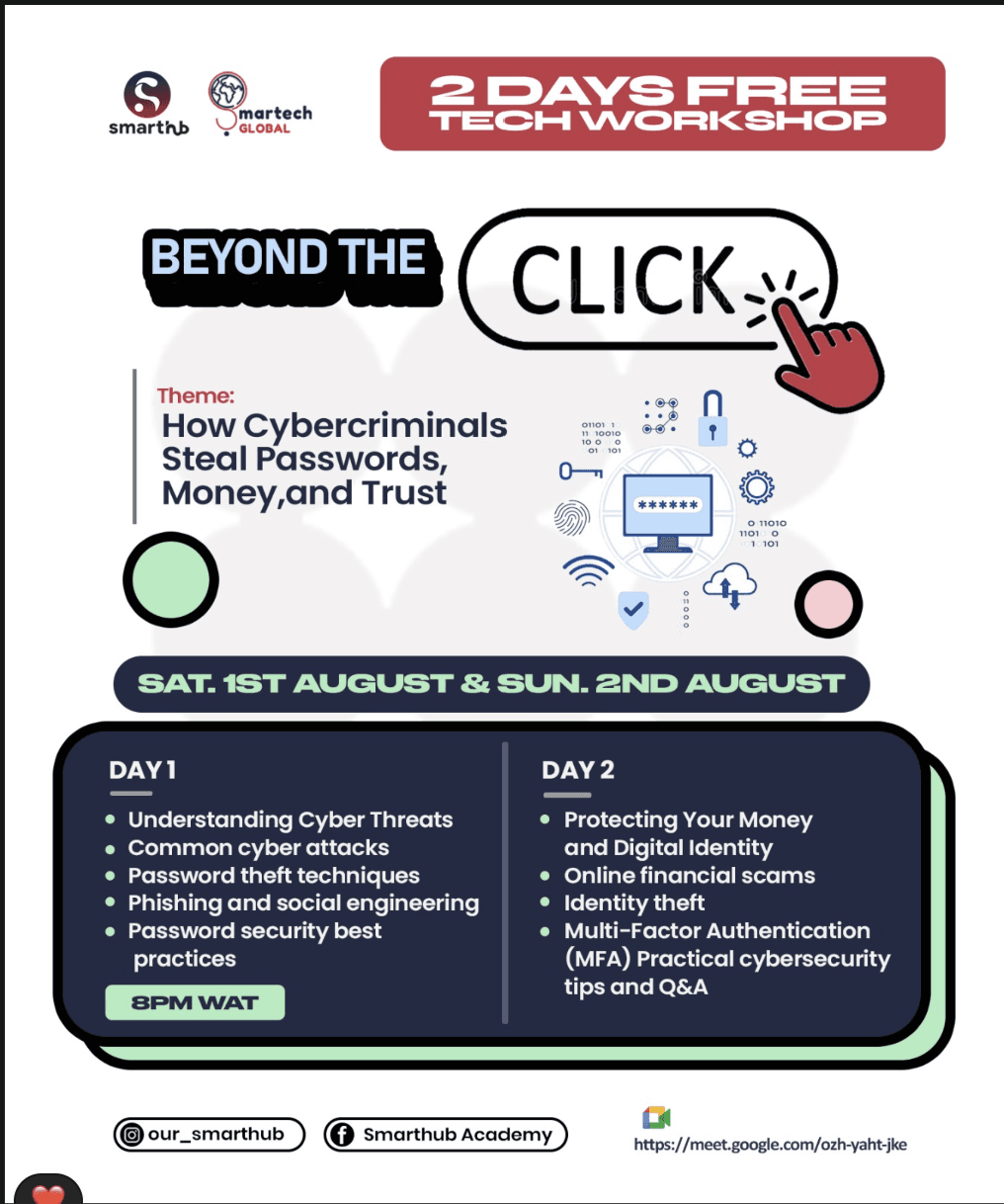
Beyond the Click:Day-2
This was Day 2 of Smarthub Academy's "Beyond the Click" cybersecurity webinar, held August 2, 2026. Where Day 1 covered the theory of how cyber criminals operate, Day 2 moved into live demonstration — showing attendees exactly how a phishing attack is carried out from start to finish. Justina Augustus opened with the agenda and ground rules, and Emmanuel Uwa recapped the previous session before diving into the main content. He began by defining digital identity — a person's full online presence across email, social media, phone numbers, and photos — and stressed that an email account is the "master key" that can be used to reset passwords and compromise every linked account, potentially leading to financial theft. The centerpiece was a live phishing simulation using a tool called GoFish against a mock target ("Smart Global"). Emmanuel built a fake login page, generated a convincing HTML verification email disguised as an IT service desk request, launched the campaign using a temporary email identity, and captured the submitted credentials in real time. He showed how attackers immediately redirect victims to the legitimate site so the compromise goes unnoticed, and how they later analyze captured data like timestamps, operating system, and browser. He then covered the broader threat landscape: romance scams and market fraud built on stolen identities, the dangers of oversharing daily activities online, and Multi-Factor Authentication as an essential defense layer. Importantly, he explained MFA's limits — tools like Evilginx use man-in-the-middle techniques to steal active session tokens rather than passwords, bypassing MFA entirely. On ethics, Emmanuel declined a request to demonstrate Evilginx live, explaining that advanced exploitation tools are reserved for trained students and that the academy prioritizes ethical, professional responsibility over teaching offensive techniques. The session closed with core best practices — strong unique passwords, MFA, careful URL and link verification, keeping software updated, and above all never clicking a link you're not fully sure about.
PassedBeyond the Click:Day-1
This was Day 1 of a two-day Smarthub Academy cybersecurity webinar titled "Beyond the Click," held on August 1, 2026, focused on how cyber criminals steal passwords, money, and trust. Justina Augustus moderated the session (with coaching from Edison Sime), opening with announcements about current cohorts, the scholarship scheme, and a new course starting October 12th. The main content was delivered by Emmanuel Uwa, a security engineer at Matup Academy, who walked participants through the landscape of modern cyber threats. He explained that cyber crime today operates like an organized business rather than the work of lone hackers, then covered the major attack methods: phishing (fake messages impersonating trusted entities), malware, vishing (phone-based scams), fake copycat websites, data breaches (using the 2013 Yahoo breach of 3 billion accounts as a case study), and social engineering — which he emphasized as the most dangerous tactic because it manipulates human emotions rather than attacking systems directly. He illustrated these with real examples, including the Colonial Pipeline ransomware attack, a pizza-themed phishing test his team ran on a client company, and his own near-miss with a fake scholarship scam on Instagram. The session closed with practical defenses: avoiding predictable and reused passwords, being wary of open public Wi-Fi, spotting phishing red flags like false urgency and requests for sensitive details (PINs, BVN, NIN), carefully checking URLs for subtle misspellings, understanding that the HTTPS padlock doesn't guarantee legitimacy, and adopting password managers and multi-factor authentication as the primary lines of defense. Day 2 will feature a live simulated phishing attack in a safe lab environment, and attendees were encouraged to enable MFA, disable auto-connect to open Wi-Fi, join the community group chat, and invite friends to the next session.
 Passed
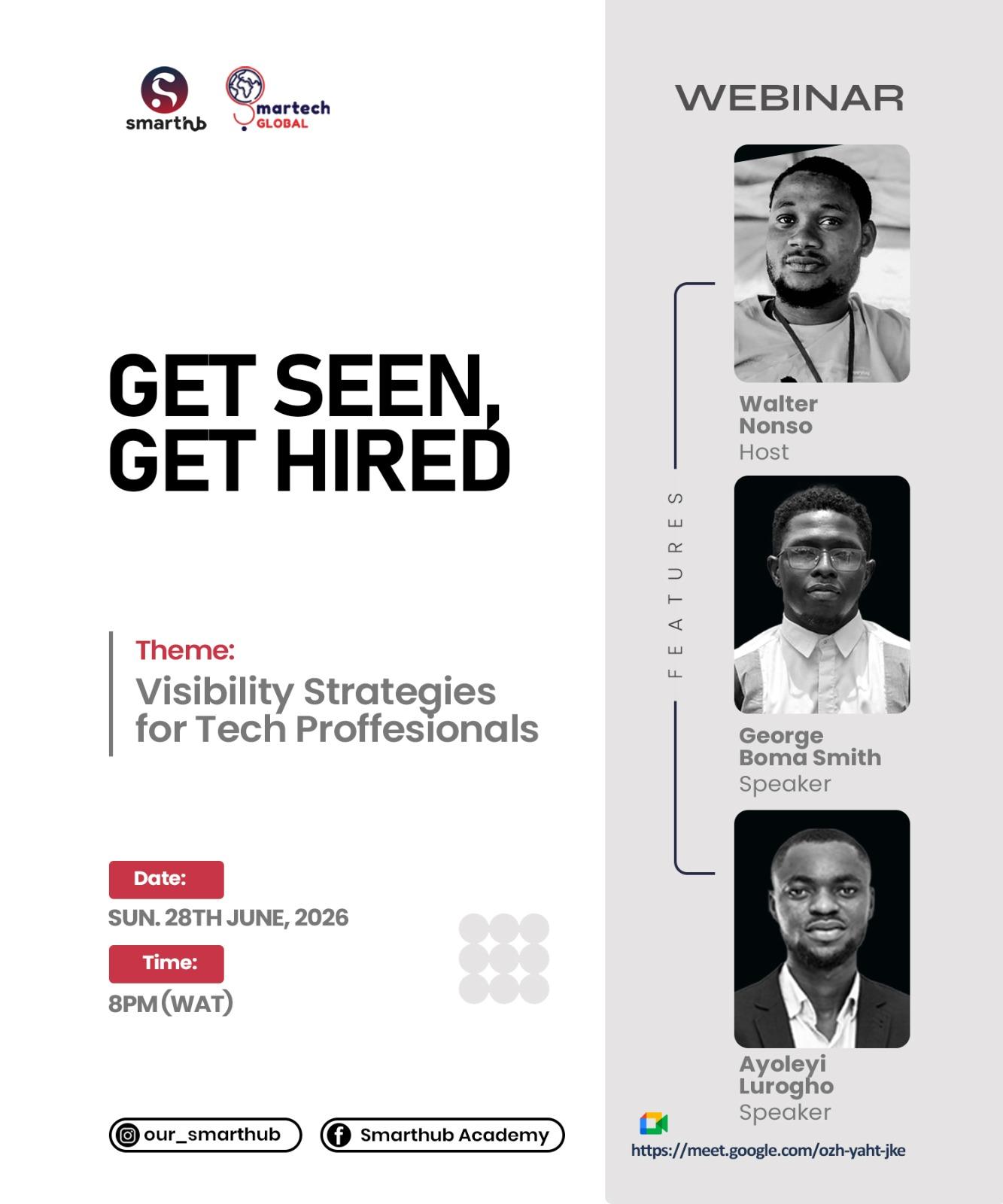
GET SEEN, GET HIRED
Visibility Strategies for Tech Professionals. You could be the most skilled person in the room and still get overlooked. In tech, talent alone doesn't get you hired - visibility does. This month, we're breaking down the strategies that actually get you noticed: how to show up online, build a presence that speaks before you do, and position yourself so the right opportunities find you. Whether you're job hunting, freelancing, or just trying to get taken seriously in your field - this one's for you. Come ready to be seen.
 Passed
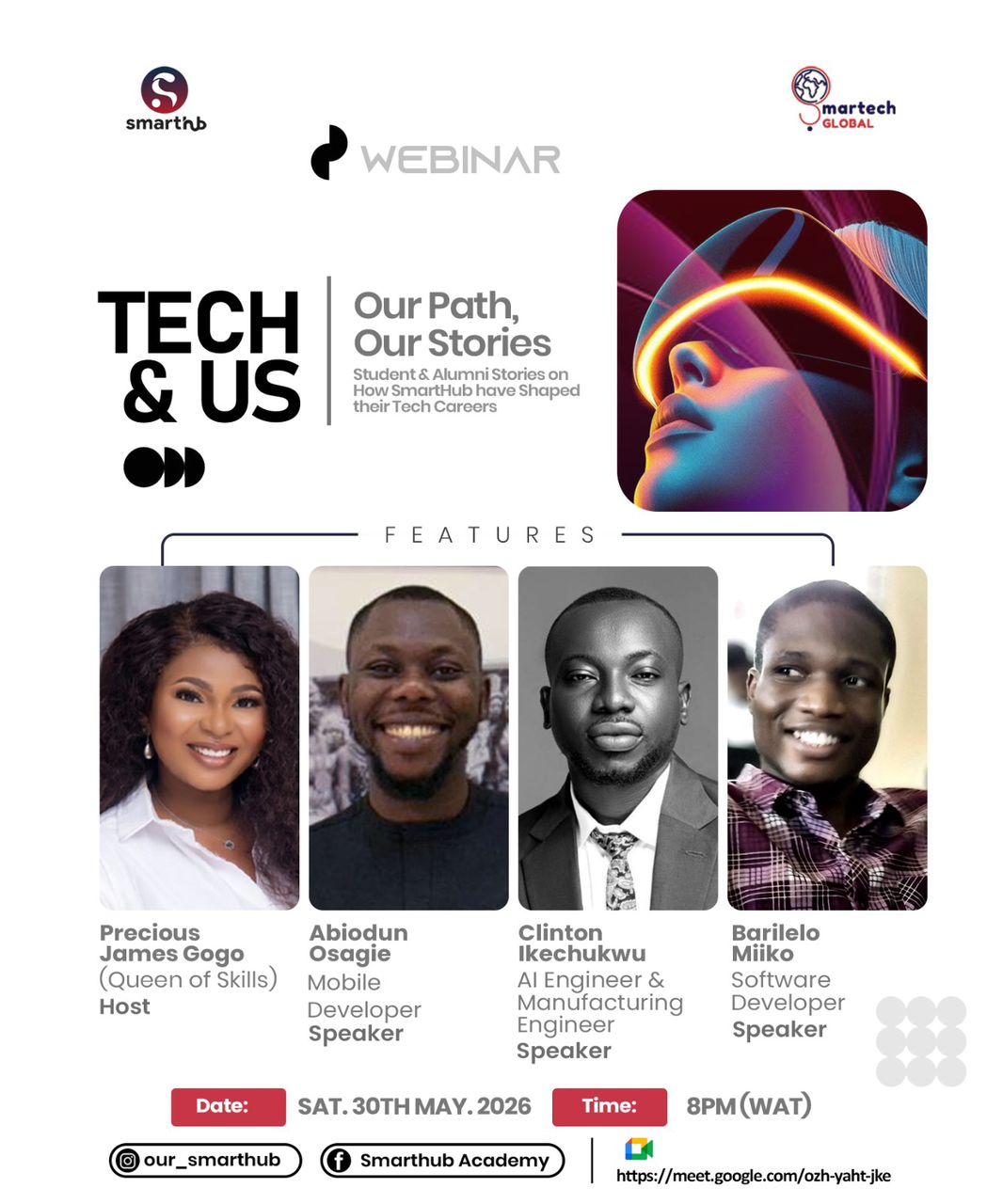
TECH & US
What does a career in tech actually look like, and how do you get there? This webinar brings together SmartHub Students and Alumni to share the honest version. The bootcamps they took, the skills they built, and the jobs and opportunities that followed. Whether they moved into Web Development, Data Science, Cyber Security, Ai Engineering, DevOPs or Product Design, each story is different but the thread is the same. If you're thinking about making a move into tech, this is a chance to hear from people who were exactly where you are, not too long ago. Come with questions. Leave with clarity.
 Passed
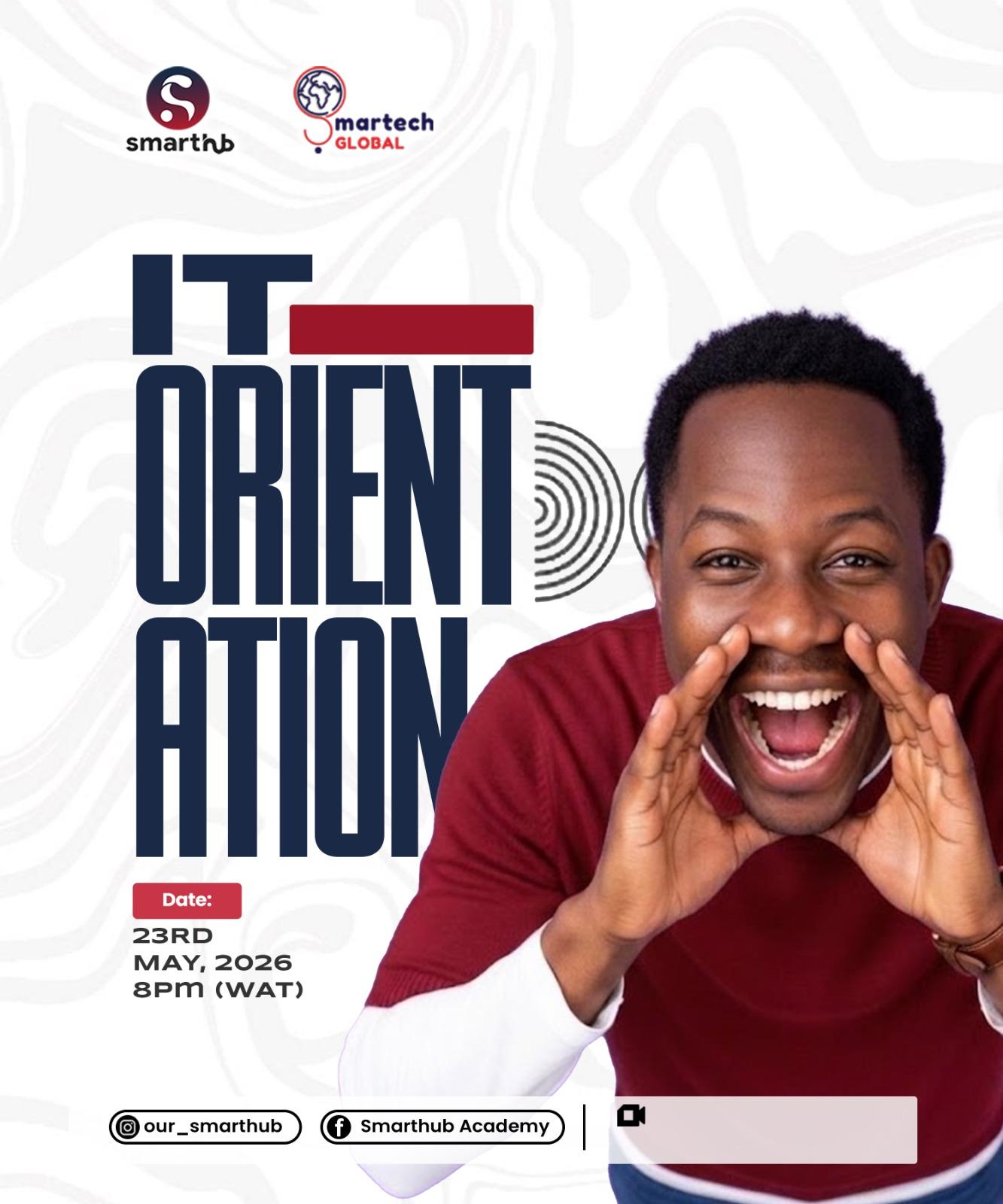
SIWES I.T ORIENTATION
Getting the most out of your SIWES placement starts before you walk through the door. This webinar is designed for students heading into industrial training who want to arrive prepared with the right skills, the right mindset, and a clear sense of what employers actually expect. We'll cover what the workplace looks like in tech-focused roles, how to apply your academic knowledge on the job, how to fill your logbook, and what you can do during your placement to stand out. Whether you're going into Web Development, Data Science/Analysis, Cyber Security, or a related field, this session gives you a practical head start.
 Passed
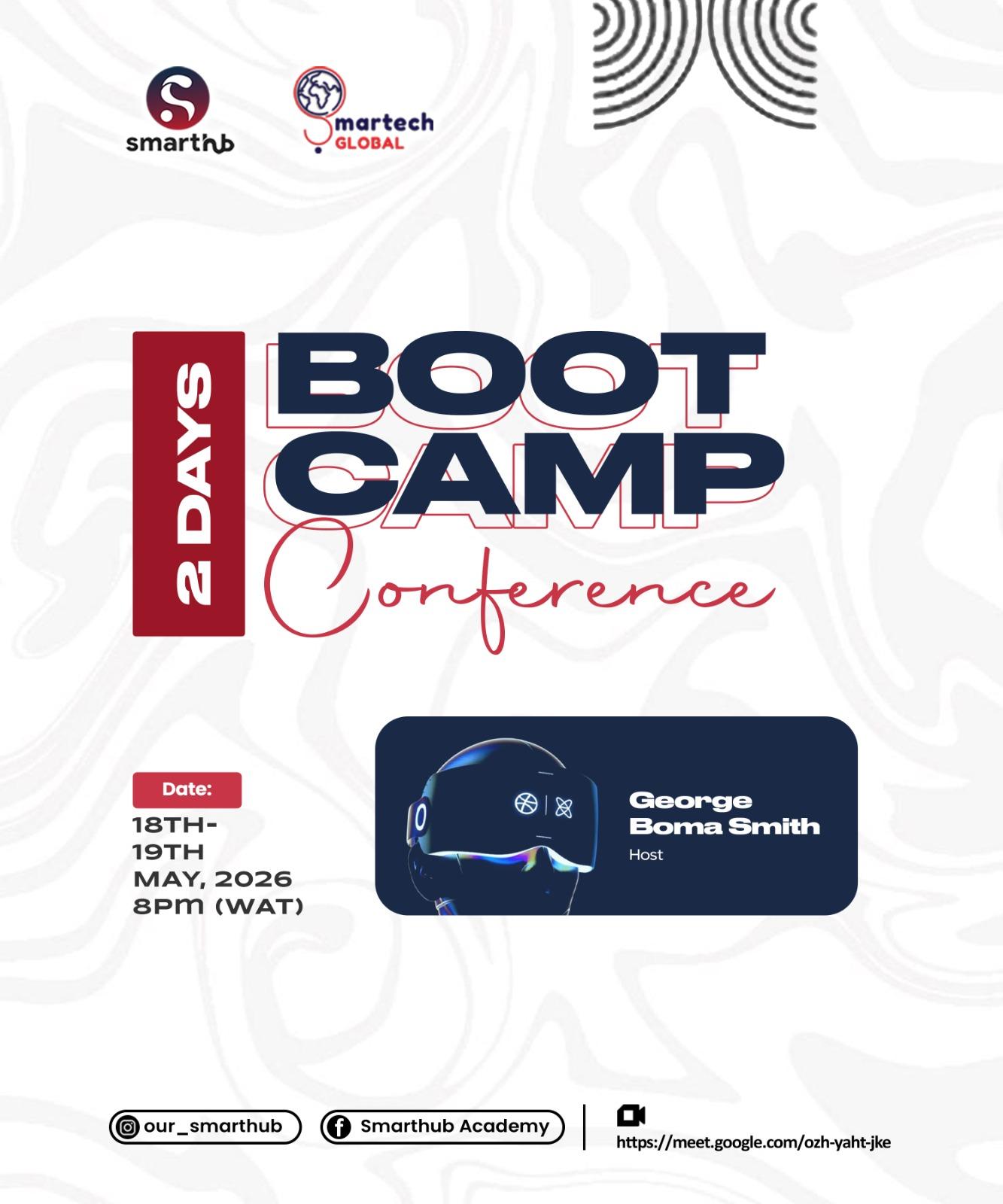
2026 Boot Camp Conference: Day 2
Day 2 of getting a complete walkthrough of how SmartHub trains tech talent. In this orientation session, our experts break down every specialization track — data science, data analysis, full stack and mobile development, cloud computing, DevOps, cybersecurity, AI engineering, and product design — and explain how to choose the right path for your goals. You'll learn the difference between descriptive analysis and predictive modeling, what an AI engineer actually builds, and why product design has become one of the most versatile and in-demand disciplines in tech. We also cover everything you need to start strong: the six-month curriculum structure, class scheduling, the learning portal, assignment and certification requirements, internship opportunities at Smartech Global, and how remote attendance keeps the program accessible whether you're in Nigeria or abroad. Whether you're completely new to tech or returning to sharpen your edge, this is where your journey begins.